
Technology overview
We build the platformbehind the game.
A player ticket, a live match investigation and a release may pass through different products, but they all run on one platform built by EaseCation.
Last 30 days
One piece of work may pass through all of them.
A player starts in MyEC. Console verifies what happened in the game, Möbius tracks the follow-up, IAM keeps the identity consistent, and EaseCation API carries the game data between them.
Sample demo
Give every player one place to find help and data.
MyEC brings account binding, game records, feedback and support tickets together. In the last month, more than 4,400 accounts opened over 10,000 tickets; the platform has now received more than 190,000 in total. Its complete frontend is open sourced as OpenMyEC.
Explore MyECSee what is happening across the live game network.
Console puts rooms, servers, player records and moderation tools in one operational workspace. Operators can move from a report to the relevant match and take action without rebuilding the context.
Turn live game data into a stable product interface.
EaseCation API organises player, room, punishment, replay and server data for Console, MyEC and internal tools. It is the bridge between the game network and the Web platform.
One account connects the whole platform.
IAM provides the shared identity and access layer for MyEC, Console, Möbius and the rest of the platform, covering sign-in, applications, API keys and authorisation.
From player feedback to a shipped release.
Möbius connects issues, discussions, test runs and releases. The original request, current owner and final change stay together from start to finish.
The team runs on products of its own, too.
The HR Center turns applications, approvals, records and finance work into clear, traceable workflows instead of scattered messages.
MyEC
Game account connectedWelcome back
Recent tickets
Unable to join after updateEC-260905-1842
RepliedMatch reward reviewEC-260904-1168
Under reviewSeptember 5, 2026
Operations overview
Match loadLast 12 hours
00:0006:0012:00
Cluster healthAll healthy
- BedWars96 rooms
- RuneLegend42 rooms
- Lobby12 nodes
Production API
All systems operationalEaseCation API
Response preview200 OK · 86 ms
{
  "ecid": "EC-184205",
  "status": "online",
  "server": "BedWars-24",
  "party": 4,
  "verified": true
}Identity & access
Connected applications
EaseCation ConsoleOperations console
12 permissionsMöbiusProjects and issue tracking
8 permissionsHR CenterTeam processes and records
6 permissionsLatest sign-in verifiedPasskey · Shanghai · just now
Möbius
High-priority follow-up
ABC
From 8 player reports
From player support
Platform team · this week
Test pool 7 / 9
Released to Playground
Good afternoon, Alex
4 items need your attention today
Recent processes
| Process | Initiator | Status | Updated |
|---|---|---|---|
| Event budget request | Sample member A | Pending | 10 min ago |
| Creator payment | Sample member B | Processing | 1 hour ago |
| Member onboarding | Sample member C | Completed | Yesterday |
A new product does not start from another login screen.
Shared identity, interface contracts, design components and release workflows carry into the next product. The team can spend its time on the new problem instead of rebuilding the same foundations.
React + TypeScriptProduct interfaces
Shared contractsFrontend and backend
EaseCation DesignWeb and native shells
Shared deliveryPlayground to production
Each kind of work runs where it fits.
Most interfaces are delivered close to the user. Stateless APIs and scheduled jobs run on demand; services that keep a WebSocket, a collaborative document or an Agent runtime stay online. Product data remains in standard databases and object storage.
01People and clients
Players
Operators
Team
Lark
02Product interfaces
MyEC
Console
IAM
Möbius
HR Center
03Application services
EaseCation API
Message API
Serverless jobs
Persistent services
04Data and visibility
MySQL (RDS)
Redis
Object storage
SLS logs
Interfaces
Static delivery through OSS and CDN
On demand
Stateless APIs and scheduled work
Always on
WebSocket, collaboration and Agent runtime
Changes are tested away from production.
Every product has a separate Playground. A change is built and verified there first, then the same release moves into production. Health checks, structured logs and business audit events continue to show what happens after launch.
01
Playground
Build, integrate and verify
Isolated sample data02
Production
Release the verified build
Live serviceOne request, one visible trail.
SLS brings request logs, service events and business audits into the same view. When something fails, the team can follow the request instead of reconstructing it from separate systems.
Useful internal tools can grow into public products.
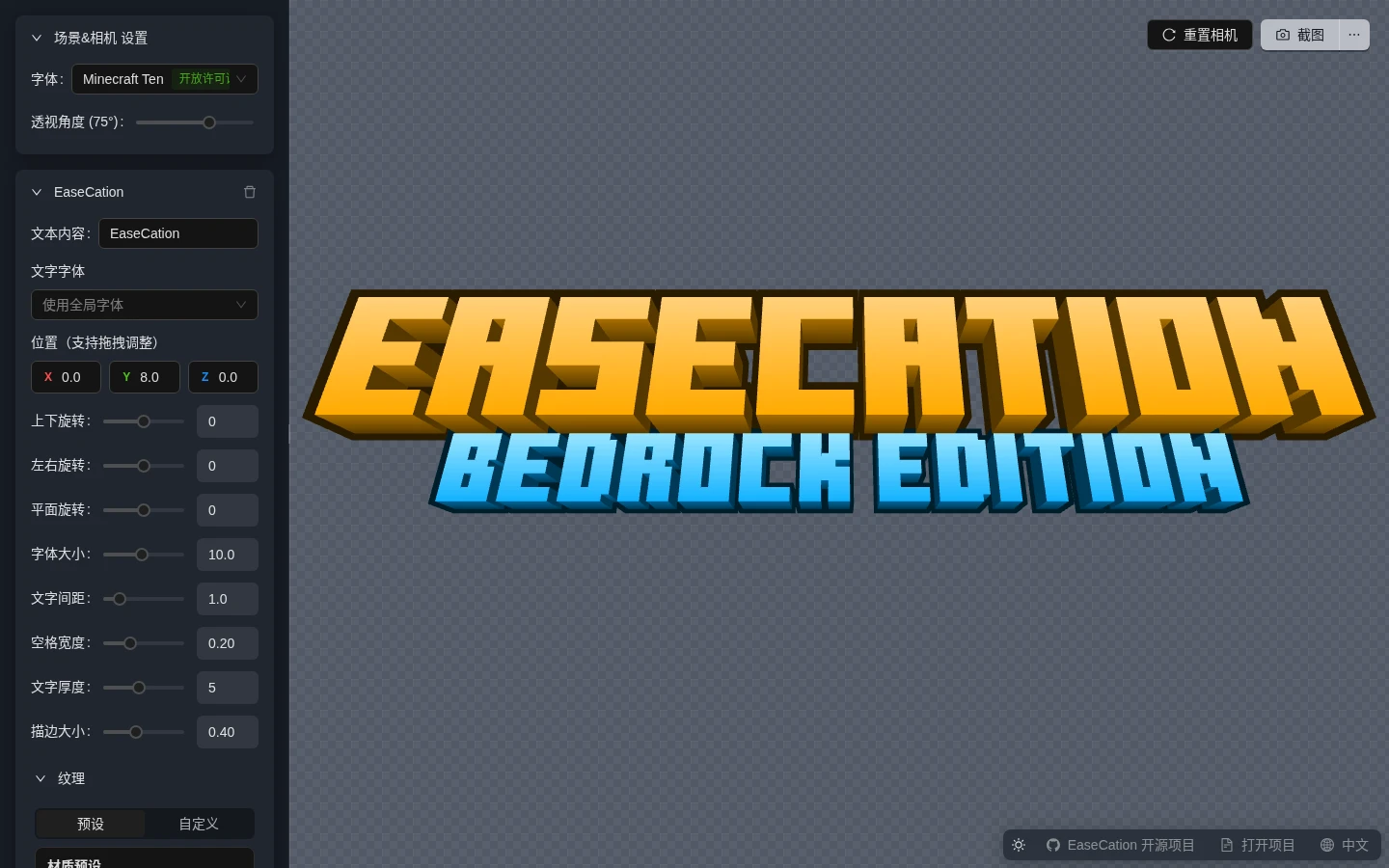
3D Text began as a faster way to make Minecraft title graphics. We later opened the complete editor to everyone: type, tune the material, position the scene and export the result. Today it has 249 stars on GitHub and serves more than 300,000 requests a month.
Open 3D Text249GitHub Stars
300K+Monthly requests
Bring AI into the workflow already in use.
Lark Agent runs on the existing platform. Codex executes the task, Web API Skill connects MyEC, IAM and other business data, and Möbius Skill supplies project context and creates follow-up work. The team starts in Lark; the result goes straight back to the product that owns it.
EaseCation AgentOnline
Lark
Codex
Web API Skill
Möbius Skill
Products
IAM still decides identity and access. The Agent gets only the permissions needed for the current task, and every result remains traceable in the original product.
Möbius sits on the same Web platform.
The login page, issue workspace and release follow-up all run inside the same platform layer used by MyEC and IAM. One image can show the entry point; the rest of the workflow stays connected behind it.
Open Möbius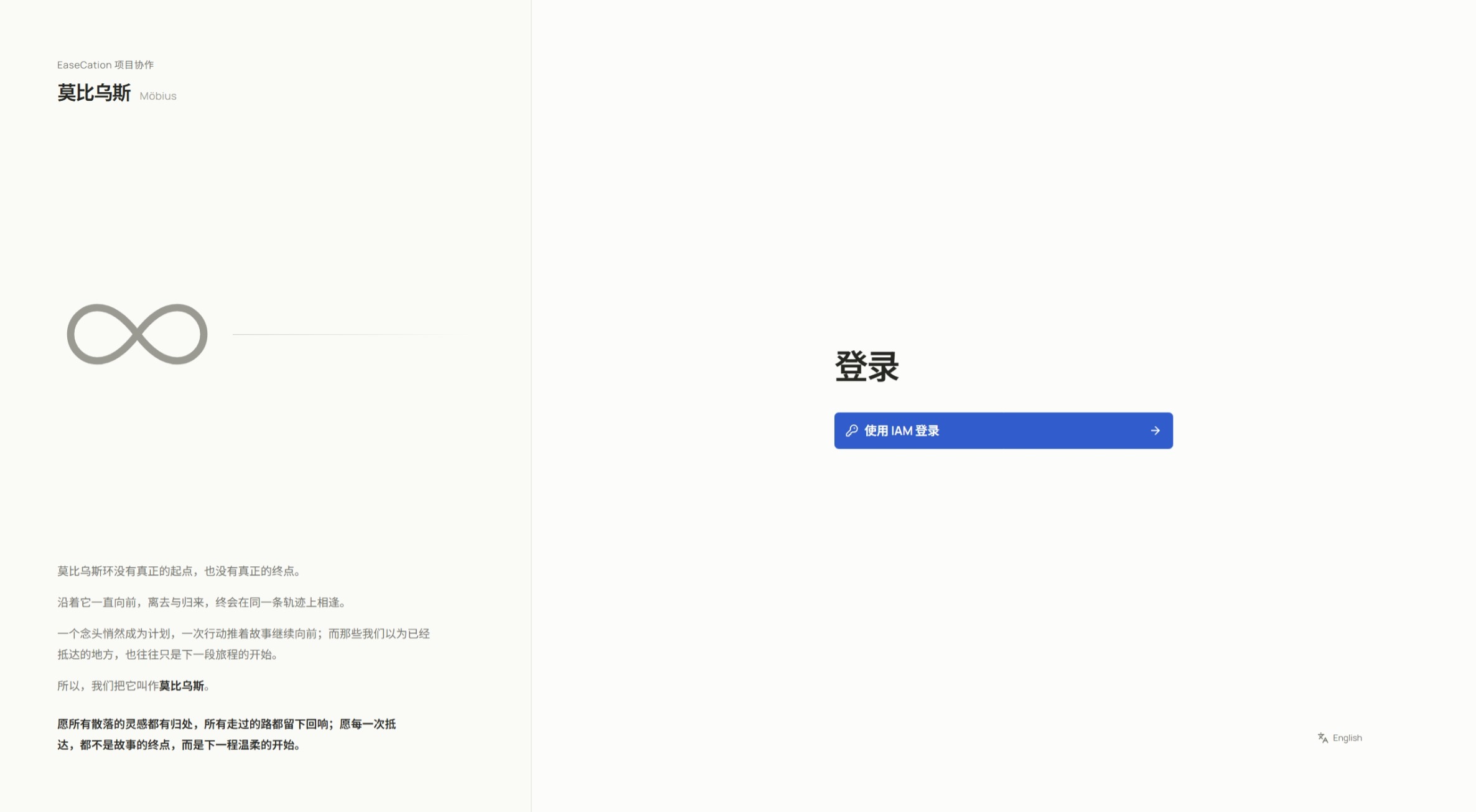
OpenMyEC opens a complete, real product.
OpenMyEC contains the player interface, staff interface, shared packages and a mock backend. Developers can run the complete account and player-service workflow locally.
View OpenMyEC on GitHub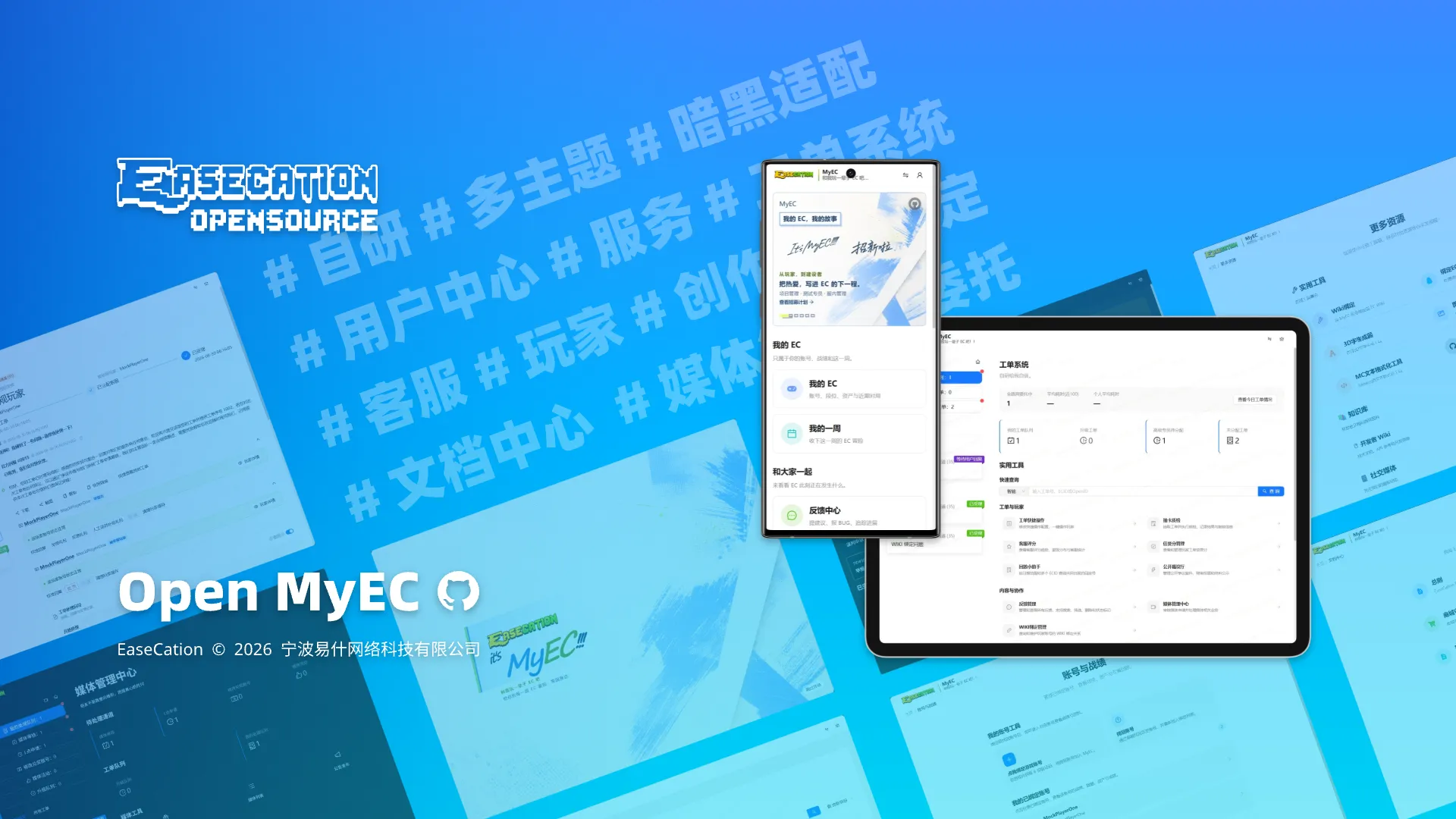
The same platform experience can serve new products.
From user centres, operational consoles and identity platforms to workflow products and enterprise Agent integrations, our platform team can take a product from process design through launch and long-term operation.